Category: Science Fiction
-
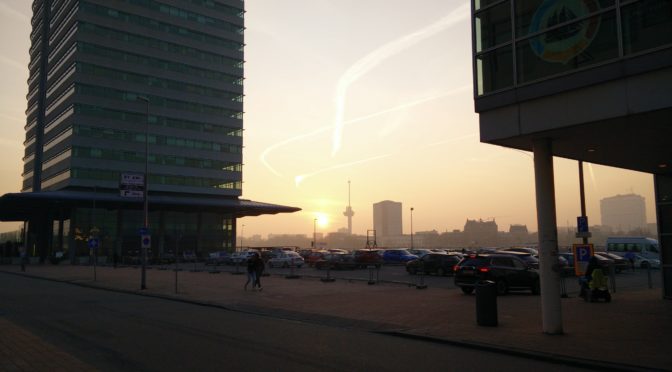
This could be Rotterdam
An excellent day in Rotterdam yesterday, ending with this appropriately Bladerunner-esque sunset shortly before a screening of Alien, which in turn was tied to the ongoing Science Fiction: a Journey Into the Unknown exhibition at the Kunsthal, which I recommend wholeheartedly. It’s rare to see an exhibition aimed at a general audience on your own…
-
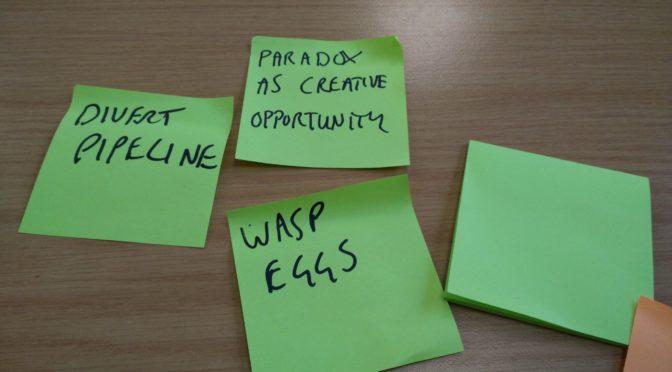
Snapshots from a workshop
Fast times at Sarum College, Salisbury. Thanks to DSTL for hosting.
-
Distort some central part of the present condition
Some wisdom from Uncle Warren: TCJ: I talked to a sci-fi editor at Tor in late 2016 about dystopias and their popularity in eras fraught with political disaster, and he said something that stuck out to me: “I think one of the underrated reasons that people read science fiction in particular is that it’s a…
-
The Greimas square-dance
More KSR on anti-anti-utopianism, this time at Commune Magazine: Clearly we enter here the realm of the ideological; but we’ve been there all along. Althusser’s definition of ideology, which defines it as the imaginary relationship to our real conditions of existence, is very useful here, as everywhere. We all have ideologies, they are a necessary…
-
Pessimism of the Intellect / Optimism of the Will
KSR’s angry optimism [CCCBLab, Barcelona]: The way that we create energy and the way that we move around on this planet both have to be de-carbonized. That has to be, if not profitable, affordable. Humans need to be paid for that work because it’s a rather massive project. It’s not that it’s technologically difficult (we…