Albanian scholar and philosopher Lea Ypi encountered a thread on social media comprising people commenting—quite cruelly, in many cases—on a photograph of her grandparents on honeymoon in the Italian Dolomites during 1942.
This came as a shock, not least because she’d been told that all such family documents and ephemera had been lost in the early days of Albania’s post-ww2 communist dictatorship, after her grandfather’s incarceration for treason. The comments, as well as the context of the photo according to its discoverer, also suggest that Ypi’s grandparents may have been spies for the Nazis, the Allies, or even both.
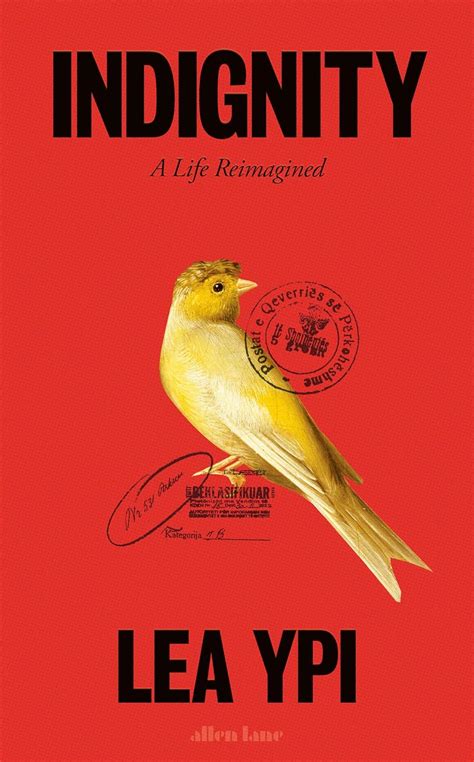
Ypi was very close to her grandmother, and so she heads to the still-contentious archives in search of the truth, albeit burdened by the philosopher’s understanding that truth is not so simple a thing as an op-ed might want us to believe. Her intention is to novelise the events and times of her grandmother’s life: this is a story of considerable historical and geographical scope, starting as it does in Ottoman Anatolia, and playing out among the shifting states and kingdoms and empires that held sway over the Balkans and the Eastern Mediterranean in the first half of the C20th. Questions of race, ethnicity, nationality, religion and belonging are all in flux, in a way that—as Ypi notes—has an alarmingly contemporary feel to it.
Indignity is about a period and a part of the world in which I’ve recently become quite interested, and so the prospect of a novelised exploration thereof, complete with philosophical digressions on the eponymous theme, was an exciting prospect. Regrettably, however, the book never came to life for me; sometimes the idea of a book far outshines the book itself. It seems churlish to say it of such an accomplished scholar, thinker and author, but nonetheless, it seems evident that writing compelling fiction is not among Ypi’s considerable talents.
The sparseness of the archival evidence may have presented obstacles, as may certain inhibitions around imagining her cast of characters which Ypi discusses in her afterword. But I think it’s more basic than that: the ratio of showing to telling is strongly weighted toward the latter; a stream of reported thoughts, events and feelings fails to conjure an engaging sense of interiority; and what narrative flow can be found is interrupted by clunky similes, stilted dialogue, and jarring shifts of point-of-view, including occasional interjections from Ypi as authorial angel. It’s just not written well.
It’s a work of great ambition, with a profoundly personal knot of moral and philosophical questions as its beating heart, and the thematic of dignity is both urgent and eternal. But while I wouldn’t dare question Ypi’s command of her materials, her grasp of the chosen form is insufficient to the task she sets herself here. A shame; I hoped to enjoy this book far more than I did, but for me the characters and scenes lay lifeless on its pages from beginning to end.
Leave a Reply